
Gorilla trekking
Uganda vs Rwanda
There’s a moment during gorilla trekking when the forest seems to pause around you.
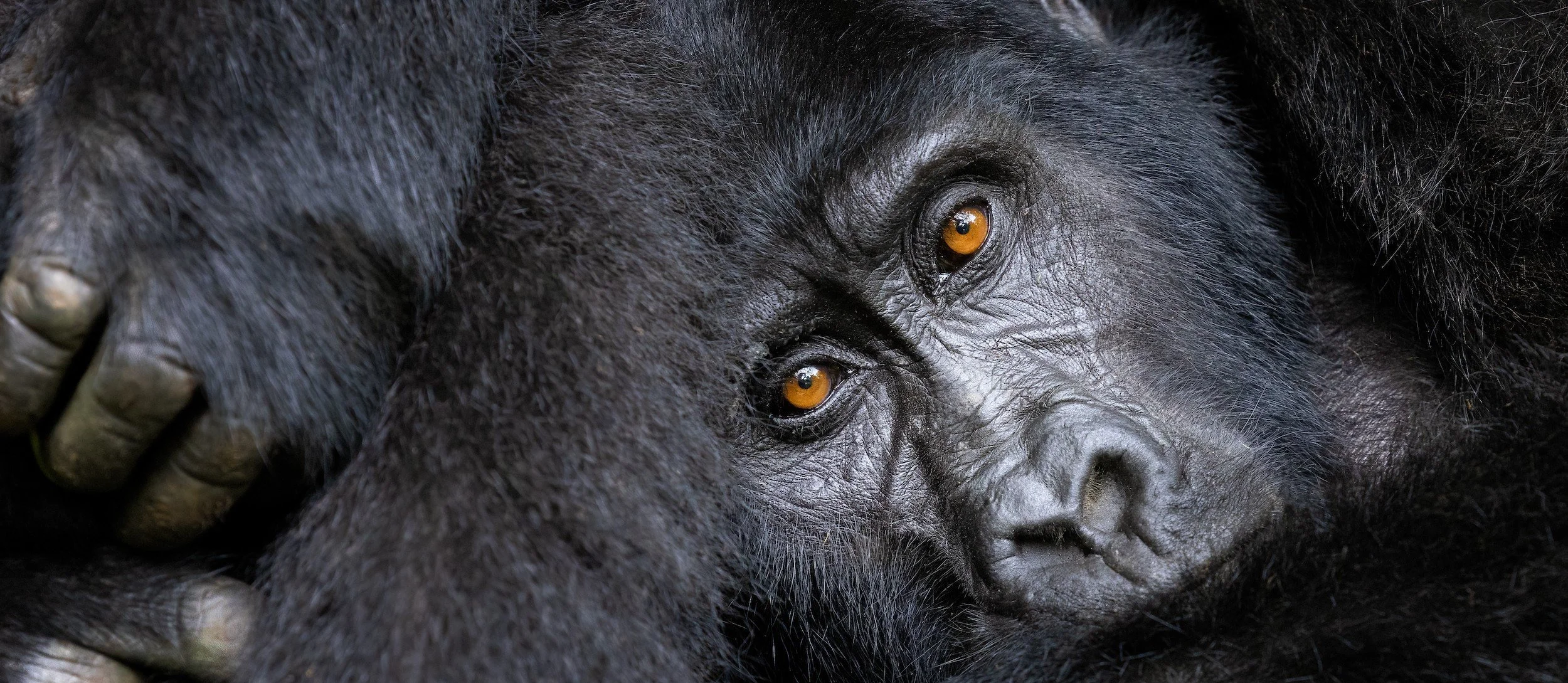
The guides stop speaking. Branches shift somewhere ahead. Then suddenly, through mist and dense foliage, a silverback appears — impossibly calm, entirely aware of your presence, and completely uninterested in performing for it.
People often describe gorilla trekking as a once-in-a-lifetime experience. What they speak about less often is how different that experience can feel depending on where you go.
Uganda and Rwanda both offer access to endangered mountain gorillas. Both are extraordinary. But they unfold in very different ways.
The difference isn’t the gorillas themselves.
It’s the landscape around them, the pace of the trek, and the way the encounter reveals itself.
UGANDA - THE WILD EXPERIENCE
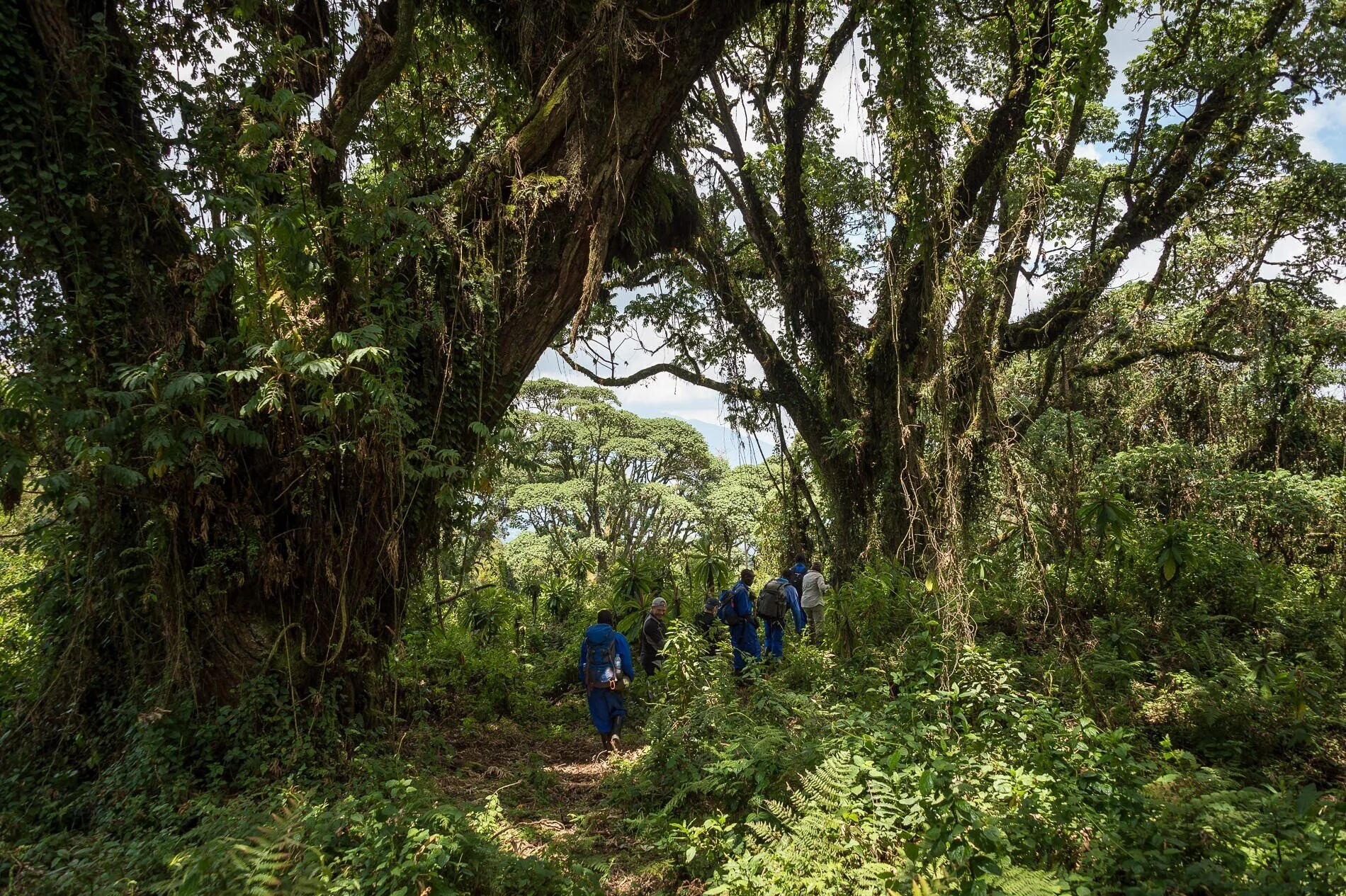
In southwestern Uganda, Bwindi Impenetrable National Park feels ancient in the truest sense of the word.
The forest is dense, layered and deeply atmospheric — thick undergrowth, moss-covered trees and steep terrain disappearing into mist. Trekking here can vary dramatically depending on your assigned gorilla family. Some groups are reached within an hour. Others require several hours of hiking through challenging rainforest terrain.
The experience feels immersive from the beginning.
Visibility is often limited by vegetation, which means sightings unfold slowly and unexpectedly. You may hear movement before seeing anything at all. A glimpse of black fur through leaves. The crack of branches deeper in the forest. Then suddenly, an entire gorilla family emerges from the undergrowth around you.
It feels less curated. Less immediate. More earned.
Bwindi is also home to over 20 habituated gorilla families, spread across sectors including Buhoma, Ruhija, Nkuringo and Rushaga — each offering slightly different trekking conditions and landscapes.
Uganda feels raw in the most beautiful way.
WHAT MAKES UGANDA DIFFERENT
Beyond standard trekking experiences, Uganda also offers the Gorilla Habituation Experience, a rare opportunity to spend up to four hours with a gorilla family rather than the traditional one-hour visit.
For many travellers, this changes the experience entirely. The extended time allows the nervous system to settle. Observation becomes quieter, slower and more intimate.
Uganda also combines naturally with chimpanzee tracking in Kibale Forest and hiking experiences within the surrounding highlands.
This is often the choice for travellers drawn to wilderness in its less polished form — immersive, unpredictable and deeply connected to the forest itself.
The experience asks more of you physically, but often gives more back emotionally.
RWANDA - THE REFINED EXPERIENCE
Cross into northern Rwanda and the landscape changes completely.
Volcanoes National Park sits within the Virunga Massif, a chain of dramatic volcanic mountains shared between Rwanda, Uganda and the DRC. Here, dense rainforest gives way to bamboo forest, open woodland and expansive volcanic slopes.
The trekking experience feels different almost immediately.
While hikes can still be physically demanding, gorilla families are often located at more accessible elevations, and the open vegetation allows for clearer visibility once sightings begin.
The experience feels more immediate. More cinematic.
Instead of glimpses through dense jungle, you may find yourself standing in open bamboo forest watching a silverback move across the landscape in full view. The scenery itself also feels grander and more panoramic — green hills rolling beneath volcanic peaks.
Rwanda is home to approximately 12 habituated gorilla families, with trekking carefully regulated to minimise environmental impact.
Rwanda offers a gentler rhythm without losing the emotional weight of the encounter.
WHAT MAKES RWANDA DIFFERENT
One of Rwanda’s defining characteristics is accessibility.
Shorter transfer times, well-developed infrastructure and clearer trekking conditions make it particularly appealing for travellers seeking a more seamless experience overall.
Rwanda also offers opportunities to visit the former research site of Dian Fossey, whose work helped transform global understanding of mountain gorilla conservation.
Beyond trekking, travellers often combine the experience with volcano hikes such as Mount Bisoke or Mount Karisimbi, along with cultural and conservation-focused experiences throughout the region.
The time spent with gorillas is strictly limited to one hour — a conservation measure designed to reduce human impact on the animals and their habitat.
The encounter may be shorter, but it remains profoundly moving.
SO WHICH ONE SHOULD YOU CHOOSE?
The honest answer is that neither destination is objectively “better.”
They simply speak to different kinds of travellers.
Uganda tends to appeal to those seeking something wilder, more physically immersive and less predictable. Rwanda often suits travellers prioritising accessibility, comfort and clearer visibility during sightings.
Some travellers want dense rainforest and the feeling of discovery. Others want volcanic landscapes and a smoother overall pace.
Both experiences have the power to stay with you long after you leave.
Because what people remember most is rarely only the gorillas themselves.
It is the silence of the forest.
The anticipation before the sighting.
The strange humility of entering a world that exists entirely on its own terms.
Gorilla trekking is never just about wildlife. It’s about presence.
Working With Immersion Safaris
Gorilla trekking is one of the most extraordinary wildlife experiences on earth, however the way you experience it depends entirely on how the journey is planned.
Choosing between Uganda and Rwanda is only part of the story. Permit availability, trekking difficulty, lodge positioning, internal flights and the overall pace of the itinerary all shape the experience in ways most travellers only realise once they arrive.
At Immersion Safaris, we design gorilla trekking journeys thoughtfully and personally, helping you decide not only where to go, but how you want the experience to feel. Some travellers are drawn to the raw immersion of Bwindi’s dense rainforest. Others to the volcanic landscapes and gentler pace of Rwanda.
Because gorilla trekking is never simply about seeing gorillas.
It is about the forest, the stillness and the feeling of being fully present within the wild.
Ready to start planning your Gorilla Trekking Safari? We would love to support you plan your dream trip.
Write to us at phoebe@immersionsafaris.co and tell us where in Africa is calling you.